Raising Children in the Age of AI: Why Ages 5–7 Matter
Artificial intelligence is no longer simply a technology of the future. It is already becoming part of the world children are growing up in. That makes AI literacy increasingly important — but AI literacy for young children does not mean sitting them in front of a chatbot or asking them to use advanced AI tools. For younger children, the most valuable starting point is much more fundamental. It is about learning to recognise patterns, classify information, ask questions, make predictions, test ideas, understand cause and effect, and realise that technology does not always produce the right answer. These are the thinking skills that later help children understand how artificial intelligence works. UNESCO's work on AI competencies in education also emphasises a human-centred approach to artificial intelligence, including critical judgement, responsible use, creativity and understanding how AI systems affect people. So what does this mean for a five-, six- or seven-year-old?
Is Ages 5–7 Too Early to Learn About AI?
Not if the learning experience is designed appropriately. At this age, children are already developing many of the thinking skills that sit behind computational thinking and artificial intelligence. They learn to: - group objects according to similarities and differences - recognise patterns - predict what might happen next - understand simple rules - connect cause and effect - try different solutions - learn through trial and error Artificial intelligence systems also work with concepts such as patterns, examples, classification, rules, predictions and data. The goal at ages 5–7 is therefore not to teach advanced machine learning. It is to help children build the foundations that will allow them to understand more complex technologies later.
AI Literacy Is More Than Using AI Tools
There is an important difference between using artificial intelligence and understanding it. A child can ask an AI tool a question and receive an answer within seconds. But meaningful AI literacy goes further. Children gradually learn to ask: How might the system have reached that answer? Could the answer be wrong? What information might it have used? Why might two examples produce different results? What should people decide for themselves rather than leaving to technology? These questions help children move from passive technology use towards critical and creative thinking.
What Does AI Learning Look Like at Ages 5–7?
For young children, AI concepts are most meaningful when they are connected to play, physical exploration and real-world experiences. Activities might involve: - sorting and classification games - recognising visual patterns - prediction challenges - cause-and-effect experiments - robotics projects - sensors - simple coding sequences - storytelling - teamwork - testing different solutions For example, children might explore questions such as: How does a robot know that an object is red? Why can a sensor sometimes make a mistake? How could we help a system recognise something more accurately? Why might more examples lead to a better prediction? These questions introduce important ideas without requiring children to work with complex terminology.
Robotics Builds Strong Foundations for AI
Robotics is particularly valuable because children can see the relationship between instructions, sensors and outcomes. They build something. They programme it. They observe what happens. Then they change their solution and test again. A child might discover that a robot behaves differently when: - a sensor receives different information - the order of instructions changes - a value is increased or decreased - the environment changes This helps make abstract ideas visible. Instead of technology feeling like magic, children begin to understand that systems operate according to information, rules and decisions.
Pattern Recognition and Classification
Patterns are central to both mathematics and artificial intelligence. Children naturally practise pattern recognition when they: - sort objects - continue sequences - identify similarities - group items by characteristics - notice what has changed Classification activities can introduce the idea that a system needs information in order to make decisions. For example: Which objects belong in the same group? What characteristic are we using? Would everyone classify them in the same way? What happens if an example belongs to more than one group? Simple questions like these begin to develop data awareness and critical thinking.
Learning to Predict — and Learning That Predictions Can Be Wrong
Prediction is another powerful concept. Before running a robot or testing an experiment, we can ask: “What do you think will happen?” The child makes a prediction. Then they test it. They compare their prediction with the actual result. If the result is different, they investigate why. This teaches an important lesson for the age of AI: A prediction is not automatically a fact. Technology can also make predictions that are incomplete or incorrect. Learning this distinction early helps children develop a healthier relationship with intelligent systems later.
Why Problem Solving Matters
Good AI literacy begins with good problem solving. When a robot does not behave as expected, children can ask: What went wrong? Which part should I change? What happens if I try another solution? Can I improve the result? This process encourages children to see mistakes not as failure, but as information. They analyse. They change something. They test again. They improve their solution. This same mindset supports coding, engineering, mathematics and later AI learning.
Creating Instead of Only Consuming Technology
Children are surrounded by technology. But there is an important difference between consuming digital experiences and creating with technology. When children design a robot, build a mechanism or programme a solution, technology becomes a creative material. They begin to understand that digital systems are designed by people. Someone defines the rules. Someone chooses the data. Someone decides what the technology should do. This is a powerful foundation for responsible AI literacy.
What Is the Code of Bricks Approach?
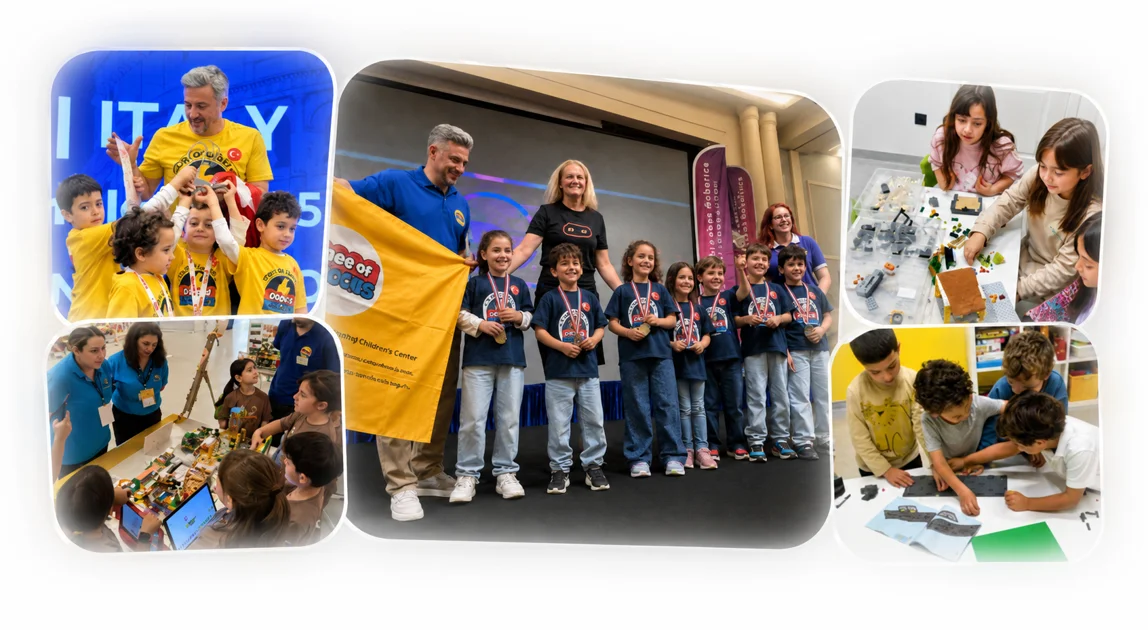
At Code of Bricks, we believe young children should first experience technology through exploration, making and problem solving. For ages 5–7, the focus is not on increasing screen time or teaching children to depend on AI tools. Instead, children develop foundational skills through robotics, coding, LEGO® Education projects, sensors, patterns, experiments and story-based challenges. They: - design - build - code - make predictions - test their ideas - observe results - identify problems - improve their solutions These experiences build many of the thinking skills that later support deeper learning in artificial intelligence.
Does Code of Bricks Have an AI Programme for Ages 5–7?
Our dedicated Computer Science & Artificial Intelligence programme is designed for older children who are ready to explore AI concepts in greater depth. For ages 5–7, we focus on building the foundations first through robotics and coding. Children develop: - algorithmic thinking - pattern recognition - classification - cause and effect - problem solving - logical thinking - curiosity about how technology works This creates a more meaningful pathway into artificial intelligence as they grow.
Preparing Children to Question Technology
The future will not only need people who know how to use AI. It will need people who can: - ask better questions - recognise unreliable information - think critically - understand how systems work - make responsible decisions - create new solutions These abilities do not suddenly appear in secondary school. Their foundations develop gradually through curiosity, exploration and problem solving. For young children, that is where AI literacy should begin.
Helping Children Become Creators of the Future
Our goal at Code of Bricks is not to raise children who simply consume technology. We want children to become curious thinkers who understand technology, question it and use it creatively. The children who thrive in an AI-powered future will not necessarily be the ones who memorise the answers given by technology. They will be the ones who know how to ask meaningful questions, test ideas and create something new.
Discover the Right Starting Point for Your Child
Every child's experience with technology is different. Through our individual introductory workshop, we can explore your child's interests, experience and readiness and help identify the most appropriate starting point.
Frequently Asked Questions
Is age 5 too young to learn about artificial intelligence?
Children aged 5 do not need advanced AI tools or technical machine-learning lessons. Age-appropriate activities involving patterns, classification, prediction, robotics and cause-and-effect can build useful foundations for later AI learning.
What does AI literacy mean for young children?
For young children, AI literacy begins with understanding that technology works with information, rules and patterns. It also includes asking questions, checking results, solving problems and learning that technology can make mistakes.
Should young children use AI chatbots?
Using an AI chatbot is not the same as learning about artificial intelligence. For young children, hands-on, social and age-appropriate activities can provide stronger foundations before independent use of advanced AI tools.
How can robotics prepare children for AI?
Robotics allows children to see how instructions, sensors, information and decisions affect a system's behaviour. This helps make concepts such as algorithms, data, cause-and-effect and problem solving more concrete.
Discover the Right Starting Point for Your Child
Through our individual introductory workshop, we can explore your child's interests, experience and readiness and help identify the most appropriate starting point.
Request a Free Introductory Workshop